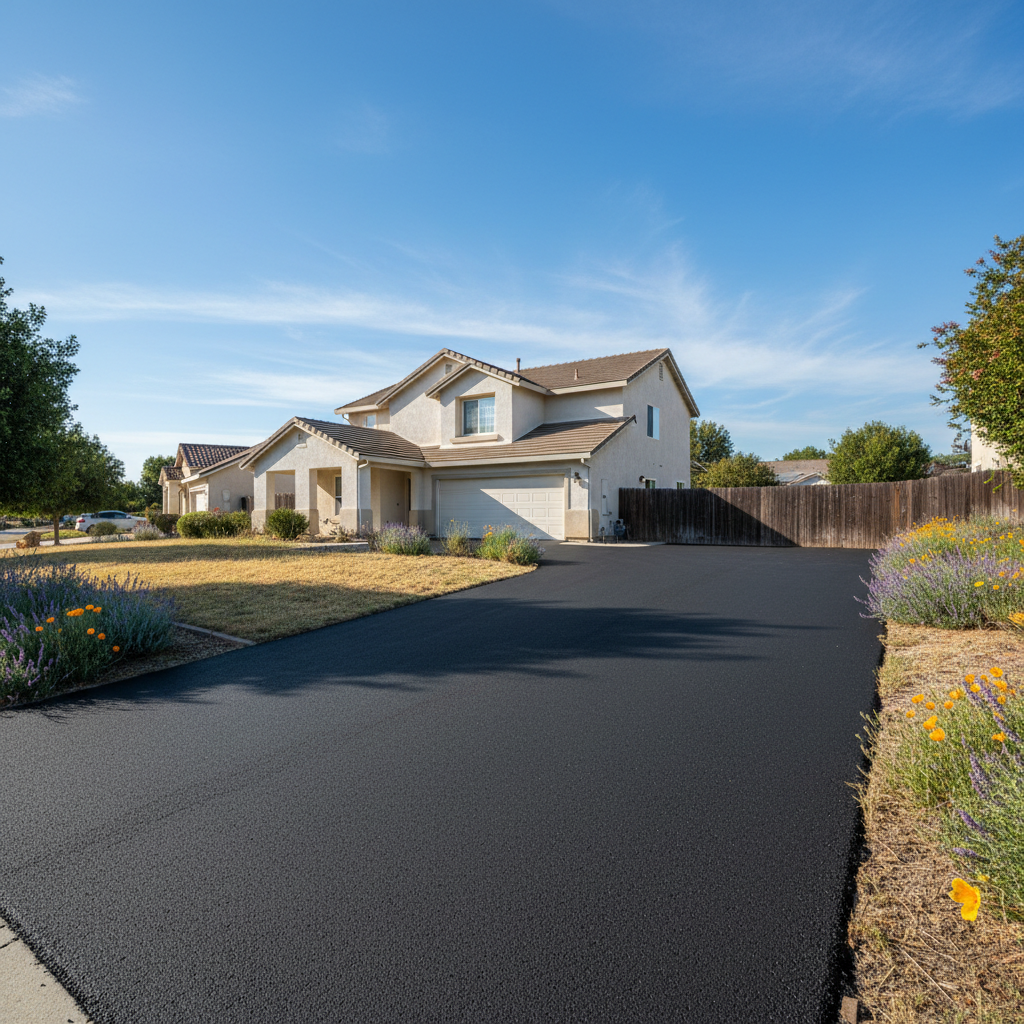
Alright, let's talk driveways. You just got a new one, or maybe you're looking at your existing asphalt and wondering how to keep it from cracking and fading. It's a big investment, and here in Tracy, with our scorching summers and occasional wet winters, your driveway takes a beating. I've seen it all over the years, from new builds in Elissagaray Ranch to older homes downtown, and the truth is, a little regular care goes a long way.
Extending Your Driveway's Life: The Basics
The biggest thing you can do to extend the life of your asphalt driveway is pretty simple: keep it clean and seal it regularly. Think of sealing like sunscreen for your driveway. It protects against UV rays, which are brutal here in the Central Valley, and it also helps repel water and oils.
Sealcoating is Key: For a new driveway, I usually recommend waiting about 6-12 months after installation before the first sealcoat. This lets the asphalt cure properly. After that, every 2-3 years is a good general rule. If your driveway gets a lot of sun exposure or heavy traffic, you might want to do it every two years. It fills in small cracks, restores the dark black color, and creates a protective barrier.
Keep it Clean: Sweep off dirt, leaves, and debris regularly. Don't let oil or gas spills sit there. They'll eat away at the asphalt. A little dish soap and a stiff brush can usually clean up fresh spills. For tougher stains, there are specific asphalt cleaners, but always test them in an inconspicuous spot first.
Watch the Edges: The edges of your driveway are often the weakest points. Don't drive heavy vehicles too close to the edge, especially if there's no concrete border. Over time, this can cause crumbling and cracking.
Regular Maintenance: What You Need to Do
Beyond sealcoating, there's a few things you should be doing a couple of times a year to keep an eye on things.
Inspect Regularly: Walk your driveway every few months, especially after a heavy rain or a long hot spell. Look for small cracks, potholes, or areas where the asphalt seems to be deteriorating. Catching these problems early saves you a lot of money down the road.
Crack Filling: Those small cracks? Don't ignore 'em. Water is asphalt's worst enemy. When water gets into cracks and then expands and contracts with temperature changes (even if we don't get hard freezes here, the ground still moves), it makes those cracks bigger. Use a good quality crack filler. You can find it at most hardware stores. Make sure the crack is clean and dry before you apply it.
Pothole Repair: If you get a pothole, don't wait. Cold patch asphalt repair products are available, and they're pretty easy to use for small holes. Clean out the hole, pour in the patch, and tamp it down firmly. For bigger potholes, you're probably looking at a professional repair.
Warning Signs of Bigger Problems
Sometimes, what looks like a small issue is actually a symptom of something bigger. Here's what to watch out for:
Alligator Cracking: This is when your asphalt looks like a dried-up alligator's skin, with a network of interconnected cracks. It usually means the base layer underneath is failing, or the asphalt itself is just getting old and brittle. Sealcoating won't fix this; it's a structural problem.
Raveling: If you see loose aggregate (the small stones) coming out of the asphalt surface, and it looks rough and worn, that's raveling. It means the binder holding the asphalt together is deteriorating, often due to sun exposure or poor drainage. Your driveway is basically falling apart from the top down.
Standing Water: If you have puddles that don't drain away within a few hours after a rain, you've got a drainage problem. This can lead to all sorts of issues, including potholes and base failure. It might mean your driveway wasn't graded properly, or there's settlement happening.
Large Depressions or Humps: These indicate significant issues with the sub-base or soil underneath. Here in Tracy, with our expansive clay soils in some areas, we sometimes see movement. This isn't just cosmetic; it's a structural failure that needs attention.
When to Call a Professional
Look, I'm all for DIY when it makes sense, but there are times you just need to call in the pros. If you're seeing any of those major warning signs — alligator cracking, widespread raveling, significant drainage issues, or large structural problems — it's time to get an expert opinion. For Alpha Asphalt Tracy, those are the kinds of jobs we handle every day. We've got the equipment and the know-how to assess the underlying cause and recommend the right solution, whether it's an overlay, a patch, or a full replacement.
Don't wait until a small crack turns into a huge headache. A little proactive maintenance now can save you a bundle later. Keep an eye on your driveway, give it some love, and it'll serve you well for years to come.