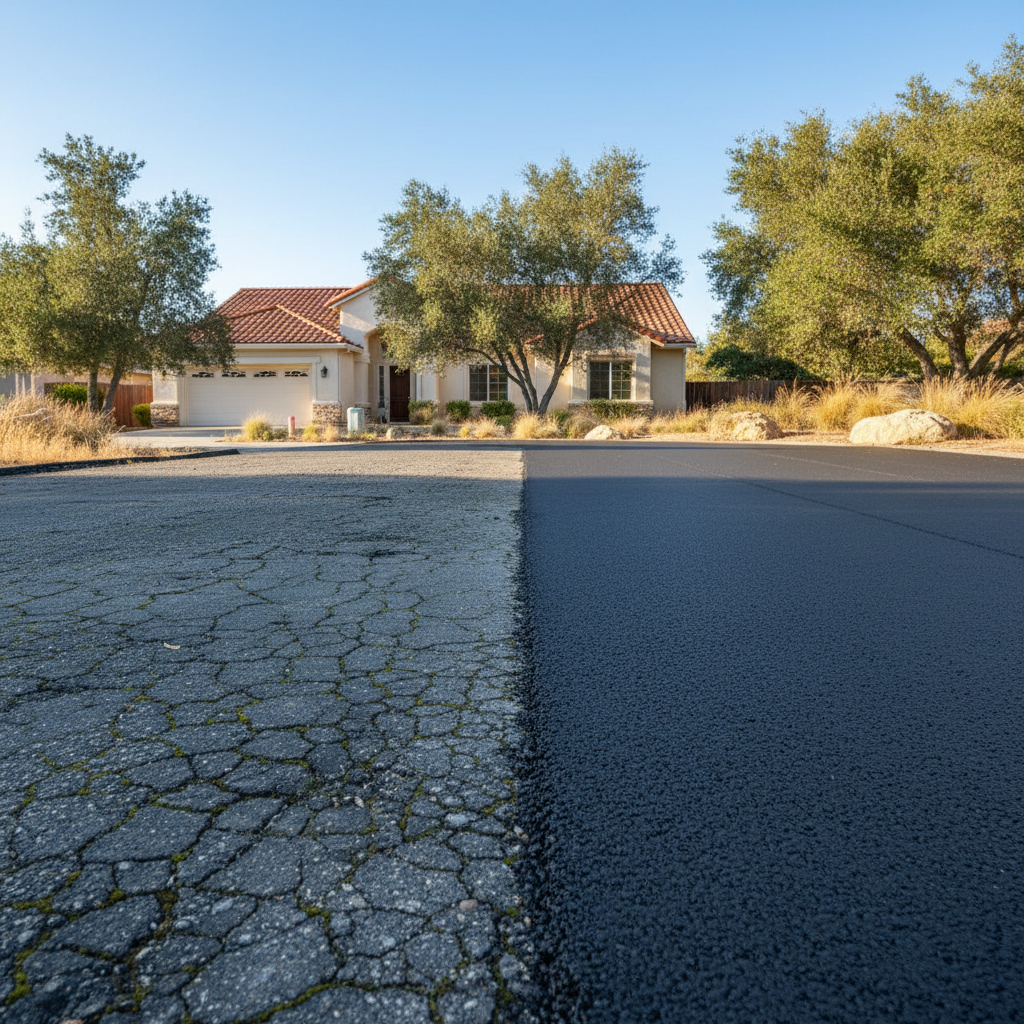
Your driveway's looking rough, huh? Cracks, potholes, maybe it's just faded and tired. You know it needs work, but what kind of work? For homeowners here in Tracy, it usually boils down to two main options: an asphalt overlay or a full-depth replacement. It's a big decision, and getting it right means saving money and hassle down the road.
What's an Asphalt Overlay?
Think of an overlay as a fresh new skin for your existing driveway. We're talking about putting a new layer of asphalt – typically 1.5 to 2 inches thick – right on top of your old one. Before we do that, though, we've got to prep the surface. That means cleaning it thoroughly, filling any major cracks or potholes, and sometimes applying a tack coat to help the new layer stick. We might also mill down the edges where it meets concrete or garage floors so you don't end up with a big lip, which nobody wants.
The big advantage here is cost. It's usually a good bit cheaper than tearing everything out because you save on excavation, hauling away old material, and a lot of the base work. It's also quicker to put in, meaning less disruption for you and your family.
When Does an Overlay Make Sense?
An overlay is a solid choice if your existing asphalt is mostly sound. What do I mean by that? If you've got some surface cracks, minor rutting, or just general wear and tear, but the underlying base is still stable, an overlay can give you another 8-15 years of good service. It's like putting a fresh coat of paint on a house with good bones, you know?
However, if your driveway looks like a jigsaw puzzle with alligator cracking everywhere, or if you've got sections sinking or heaving, an overlay is just a band-aid. That kind of damage tells me there's a problem with the base underneath, and just covering it up won't fix the root cause. You'll see those cracks come right back through the new layer pretty quickly, and then you've just wasted your money.
What's a Full-Depth Replacement?
This is exactly what it sounds like: we rip out every single bit of your old driveway – all the asphalt, and sometimes even a good portion of the underlying base material. Then, we prepare the subgrade, lay down a fresh, compacted aggregate base, and finally, pave with new asphalt. Typically, we're talking about 2-4 inches of asphalt on top of a 4-6 inch base, depending on traffic and soil conditions.
It's a more involved process, takes longer, and yes, it costs more upfront. But you're essentially getting a brand-new driveway from the ground up.
When is Full Replacement the Only Way to Go?
If your driveway is severely damaged – widespread alligator cracking, significant potholes that go deep, or major depressions, or areas that are constantly sinking – you need a full replacement. These issues point to a failing base or subgrade. Here in Tracy, especially in some of the older neighborhoods with expansive clay soils, we see this a lot. If that base isn't solid, no amount of new asphalt on top is going to hold up. You'd just be throwing good money after bad.
A full replacement also makes sense if you're looking to change the footprint or grade of your driveway. Maybe you want to widen it, or perhaps you've had drainage issues that need to be addressed by re-sloping the entire area. With a full replacement, you get a clean slate to work with.
Durability, Maintenance, and Appearance
Durability: A properly installed full-depth replacement will generally outlast an overlay, giving you 15-25 years or more if maintained well. An overlay, on the other hand, typically lasts 8-15 years. The lifespan of both depends heavily on the quality of the initial work and how well you take care of it.
Maintenance: Both options really benefit from regular sealcoating every 2-3 years, especially with our hot Tracy summers and all that UV exposure. This protects the asphalt from oxidation and keeps it looking fresh. You'll also want to fill any new cracks that appear promptly. With an overlay, you might see reflective cracking (where old cracks mirror through the new layer) sooner than with a full replacement.
Appearance: A new overlay looks fantastic – smooth, black, and fresh, just like a new driveway. A full replacement looks even better because it's a completely new structure. The key difference is how long that pristine look lasts without issues bubbling up from underneath.
My Recommendation for Tracy Homeowners
Look, I've been doing this for a long time with Alpha Asphalt Tracy. My honest recommendation? If your driveway has significant structural issues, widespread deep cracking, or a failing base, bite the bullet and go for a full-depth replacement. It's more money upfront, but it's the only way to truly solve the problem and get a driveway that will last. You'll avoid the frustration and added cost of patching up an overlay that's failing because its foundation is bad.
However, if your driveway is generally in good shape with mostly surface wear, an overlay is a perfectly viable and cost-effective solution. It'll give you many years of great service and a fresh look without the higher price tag and longer construction time of a full tear-out.
The best way to know for sure is to have a professional come out and take a look. We can assess the condition of your existing asphalt and base, explain your options clearly, and give you an honest quote for both. Don't guess – get an expert opinion before you make a big decision like this.